
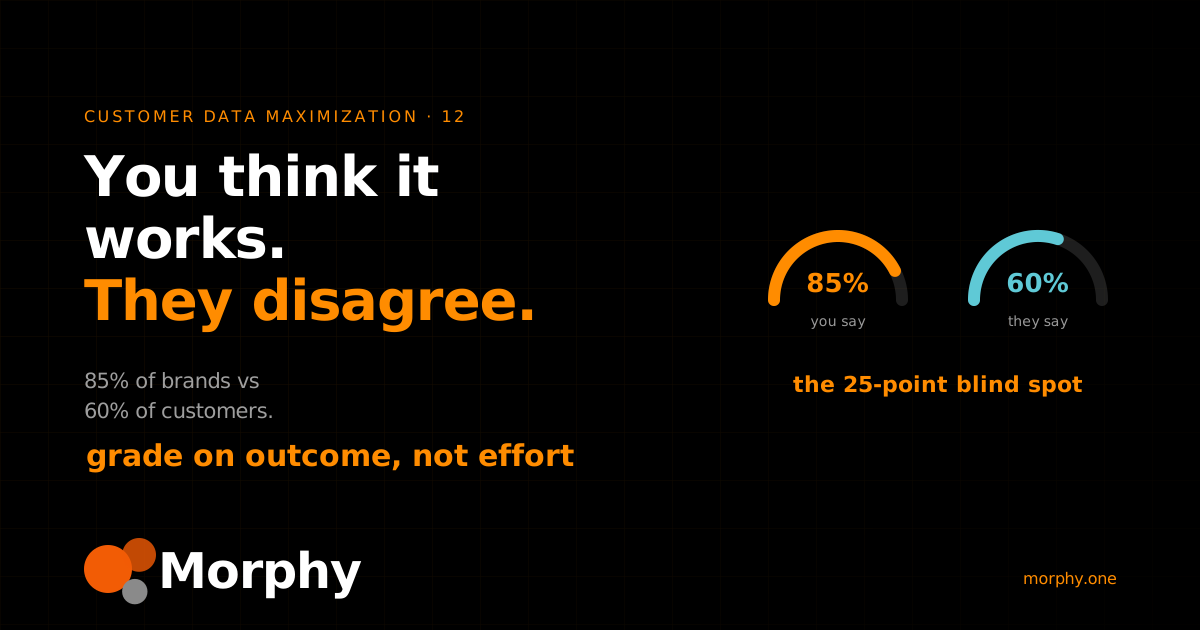
Customers rate your personalisation lower than you do because you grade yourself on effort and they grade on outcome. You count campaigns sent and first-name tokens used. They judge whether the thing in front of them was relevant. Close the gap by measuring personalisation on customer-side signal, not campaign output.
Put a marketer and their customer in the same room. Ask both how personal the last email felt. The marketer points to the segments, the dynamic blocks, the name in the subject line. The customer shrugs. It was another email about something they had already bought.
Why the two sides disagree
You measure the work you did. The customer measures the result they got. Those are different things, and the space between them is the whole problem.
85% of companies believe they personalise effectively. Only 60% of customers agree (Contentful, 2025). That is a self-assessment failing against the only judge who counts. The company is grading a report card it wrote itself.
The mechanism is simple. Effort is easy to count, so it becomes the metric. Campaigns sent, fields merged, rules configured. All of it feels like personalisation because all of it took work. None of it tells you whether the customer found the message relevant. So the internal number climbs while the customer-side number sits still.
First-name tokens are the clearest tell. A name in the subject line changes one word and leaves the offer generic. It gets counted as personalisation on the dashboard. The customer reads it as mail-merge, because that is what it is.
The evidence
The gap is not a rounding error. It is structural, and it is widening.
Adobe puts the delivery side lower than the perception side. 71% of consumers want personalised offers, but only 34% of brands provide them (Adobe, 2025). Demand is more than double supply. And the quality end is worse: just 14% of organisations deliver experiences customers call delightful, a 25% decline from 2023 (Adobe, 2025).
Read those two findings together. Customers want more personalisation, fewer brands are delivering it, and the ones that do are getting less delightful over time. Effort is going up. Outcome is going down. That only happens when a team is measuring the wrong side of the exchange.
I have run the version that works. At dunnhumby we personalised Tesco Clubcard for millions of customers, and we judged it on redemption and repeat spend, not on how many variants we sent. The number that mattered lived on the customer’s side of the glass.
Is this you?
Five quick checks. Answer each yes or no.
- Does your personalisation report count campaigns sent or blocks rendered, rather than conversion on those experiences?
- Is a first name in the subject line logged as a personalised send?
- Do you segment mainly on demographics and lifecycle stage, rather than on why the customer is here?
- Has anyone asked customers directly how relevant your messages feel in the last year?
- Would your personalisation score drop if the customer graded it instead of your team?
Three or more yes answers means you are measuring effort, and the customer is quietly marking you down.
What it costs
The bill for a perception gap does not arrive as a line item. It arrives as underperformance you cannot explain.
You spend more each quarter on personalisation tooling and content, and the internal metric rewards you for it. Meanwhile response rates flatten, because the customer never felt the difference. You are paying for personalisation and buying activity.
It costs trust too. A message that is dressed as personal but lands as generic reads as a company that does not know you, despite holding your data. That erodes the permission you need for the personalisation that would actually work. And it caps every AI investment on top. Feed an intent model the same demographic segments and campaign-output metrics, and it optimises the wrong target faster. The gap does not close. It automates.
How to close the perception gap
The fix is a change of scorecard, not a change of platform. Three directions get you started.
First, measure the customer side. Retire counts of campaigns and tokens as success metrics. Replace them with conversion on the personalised experience and downstream satisfaction. Output tells you what you shipped. Customer signal tells you whether it worked, and only the second one moves revenue.
Second, segment on intent and need, not just demographics. Age, location, and lifecycle stage describe who someone is. They do not explain why the person opened the app at 9pm looking for one specific thing. The signal that predicts relevance is the reason for the visit, not the profile attribute.
Third, make personalisation answer a question. Real personalisation figures out why the customer is here, then serves the specific thing that resolves it. Everything else is mail-merge with better formatting. If a message cannot name the need it is answering, it is not personalised, whatever the dashboard says.
You also cannot personalise to a person you have not resolved. If the same customer looks like three different people across your systems, every relevance signal is split three ways before it reaches the model. That is identity resolution, and it sits underneath this.
There is a limit to push against too. Closing the perception gap means using more of what you know, which raises the question of when knowing too much backfires. That is the creepiness line, and it is the next obstacle in this series.
Get the full personalisation measurement playbook.
Go deeper on customer data maximization
Three ways forward. Pick the one that fits where you are.
- Get the playbook. Practical notes on turning the customer data you already own into revenue, straight to your inbox. Join the newsletter at the foot of this page.
- Take the assessment. Score your customer data maximization in four minutes and see your top revenue blockers. Start the assessment →
- Book a meeting. Bring your data problem. Leave with a prioritised fix, not a platform pitch. Book a call →
Post 12 of 25 in the Customer Data Maximization series. Previous: Why does insight never reach action, and how do you close the activation gap?. Next: How do you personalise without crossing the creepiness line?.
Frequently asked questions
What is the personalisation perception gap?
It is the difference between how well a company thinks it personalises and how well its customers think it does. The company grades itself on effort, campaigns sent and tokens used. The customer grades on outcome, whether the thing in front of them was relevant. The two numbers rarely match.
How big is the personalisation perception gap?
Wide. 85% of companies believe they personalise effectively, but only 60% of customers agree (Contentful, 2025). Adobe puts the delivery side lower still: 71% of consumers want personalised offers, only 34% of brands provide them, and just 14% of organisations deliver experiences customers call delightful (Adobe, 2025).
Is a first name in the subject line personalisation?
Barely. A first-name token is mail-merge, not personalisation. It changes one word while the offer stays generic. Customers see straight through it. Real personalisation answers why the customer is here right now, then serves the specific thing that resolves it, which a name token never does.
How should you measure personalisation?
By customer-side signal, not campaign output. Count conversion on the personalised experience and downstream satisfaction, not how many dynamic blocks you shipped. Output tells you the work you did. Customer signal tells you whether it landed. Only the second number moves revenue.
Why is personalisation getting worse, not better?
Because effort is rising while relevance falls. Adobe found the share of organisations delivering delightful experiences dropped to 14%, a 25% decline from 2023 (Adobe, 2025). Teams add more tools and more tokens, then grade the activity, so the customer-side result quietly slides.