
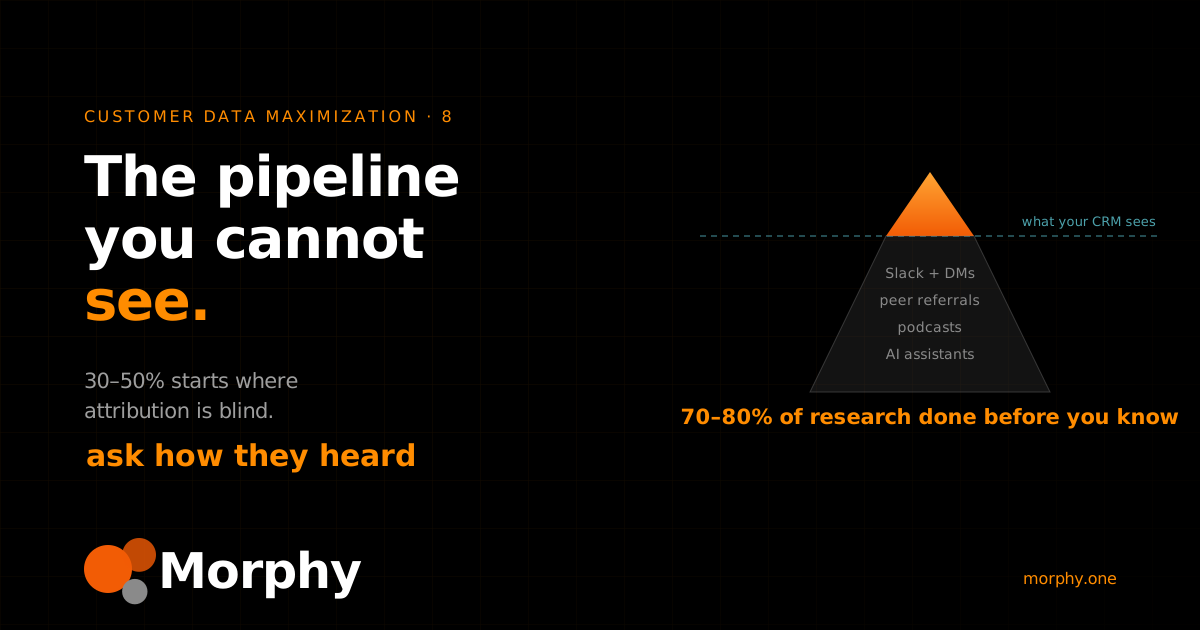
The dark funnel is the pre-pipeline research buyers do where your analytics cannot see it: private Slack groups, LinkedIn DMs, peer referrals, podcasts, AI assistants. B2B buyers finish 70 to 80% of their research before they ever contact sales. You measure it by asking buyers directly, not by tracking clicks.
A deal closes. You ask marketing where it came from. The CRM says “direct”. Nobody typed “direct” into a browser. The buyer spent three months in a private community, heard you named on a podcast, got a shortlist from a peer, then asked an AI assistant which vendors fit. None of that reached your pixels.
Why the funnel goes dark
Your analytics can only record touches that happen on surfaces you own. A form fill or a tracked link. The problem is that most buying now happens somewhere else first.
B2B buyers finish 70 to 80% of their research before they contact sales (Forrester 2025 B2B Buying Study). By the time someone fills in a form, the decision is largely made. The form is not the start of the buying process. It sits close to the end.
So your attribution captures the final step and misses the months that shaped it. A buyer forms a shortlist in a private Slack group, hears you recommended on a podcast, gets a name from a peer, then asks an AI assistant which vendors fit. None of that leaves a trace in your CRM. The system records the last trackable touch and calls it the source.
That is the mechanism. Not lost data. Data that was never collectable, because the influence happened in rooms you cannot instrument.
The evidence
Self-reported attribution consistently shows that 30 to 50% of pipeline originates in channels digital attribution cannot see: private Slack groups, LinkedIn DMs, peer referrals, podcasts, and AI assistant recommendations (ORM, 2026). Between a third and a half of what builds your pipeline is invisible to the tools you use to judge marketing.
It shows in confidence too. Only 21% of B2B marketers say they can measure marketing ROI with confidence (Demand Gen Report, 2025). Four in five are guessing, and they know it.
At Cisco I built the inbound demand-generation engine to 628 million dollars of pipeline. The lesson that stuck: the channels that got credit at the form were rarely the channels that did the convincing. Referrals and reputation did the persuading. Forms just recorded the arrival.
Is this you?
Five checks. Yes or no.
- Does a large share of your pipeline land in the CRM tagged “direct” or “organic”?
- When a deal closes, can marketing name the channels that actually influenced it?
- Do you fund the channel that got the last click, not the one buyers say they trust?
- Has a prospect ever mentioned a podcast, peer, or community you do not track?
- Do you know what share of your closed pipeline your analytics never saw coming?
Three or more yes answers means the dark funnel is already spending your budget for you.
What the blind spot costs
CRMs label this pipeline “direct” or “organic”, and budget follows the label. Money flows toward whatever the last form fill credited, which is usually paid search and retargeting, because those channels sit closest to the form. The channels doing the real influencing get under-funded, because they cannot prove their case in clicks.
So you cut the podcast sponsorship that seeds half your shortlists and pour the saving into ads that catch buyers who had already decided. You reward the catcher and starve the hunter. Over a year that misallocation compounds. You optimise harder toward the visible 20% while the invisible 80% quietly decides who wins.
This is the same failure as broken attribution, one layer earlier. Multi-touch attribution mis-weights the touches it can see. The dark funnel is the touches it cannot see at all.
How to see the pipeline you’re missing
You cannot instrument the dark funnel. So stop trying to track it and start asking about it.
Add self-reported attribution to every demand form. One question: “How did you hear about us?” Buyers will tell you what your pixels never could. It is the cheapest, highest-value field you can add to a form, and most teams still do not have it.
Then cross-reference the answers against CRM pipeline every quarter. Where buyers say they found you, and where the money actually closes, tells you which channels earn their budget. Fund credibility-building channels on that evidence, not on click data that structurally cannot see them.
Measure the right things: buying-group confidence and the share of unattributed pipeline that closes, not individual lead clicks. When you retire the vanity metrics that only count the visible funnel, this is what replaces them. See why the MQL is costing you revenue.
Get the full dark funnel playbook.
Go deeper on customer data maximization
Three ways forward. Pick the one that fits where you are.
- Get the playbook. Practical notes on turning the customer data you already own into revenue, straight to your inbox. Join the newsletter at the foot of this page.
- Take the assessment. Score your customer data maximization in four minutes and see your top revenue blockers. Start the assessment →
- Book a meeting. Bring your data problem. Leave with a prioritised fix, not a platform pitch. Book a call →
Post 8 of 25 in the Customer Data Maximization series. Previous: Why has multi-touch attribution broken, and what replaces it?. Next: How do you measure marketing across offline and digital channels?.
Frequently asked questions
What is the dark funnel?
The dark funnel is the research buyers do before they contact you, on surfaces your analytics cannot track: private Slack groups, LinkedIn DMs, peer referrals, podcasts, and AI assistant recommendations. B2B buyers finish 70 to 80% of their research there before a single tracked click (Forrester 2025 B2B Buying Study).
How much pipeline comes from the dark funnel?
Self-reported attribution consistently shows 30 to 50% of pipeline originates in channels digital attribution cannot see, from private communities to AI assistant recommendations (ORM, 2026). Between a third and a half of what builds your pipeline never appears in the tools you use to judge marketing.
How do you measure the dark funnel?
You cannot track it, so you ask. Add a 'How did you hear about us?' field to every demand form, then cross-reference the answers against CRM pipeline each quarter. Self-reported attribution reaches the channels pixels cannot, because it asks the buyer who was actually there.
Why does the CRM label dark funnel pipeline 'direct'?
Because the influencing touches left no trackable trail, so the CRM records only the last visible step and labels the rest 'direct' or 'organic'. Budget then follows that label toward the channels nearest the form, and under-funds the ones actually doing the persuading.
Is the dark funnel the same as broken attribution?
No. Multi-touch attribution mis-weights the touches it can see. The dark funnel is the touches it cannot see at all, one layer earlier in the buying process. Self-reported attribution addresses the dark funnel; fixing your model addresses attribution. You need both.