
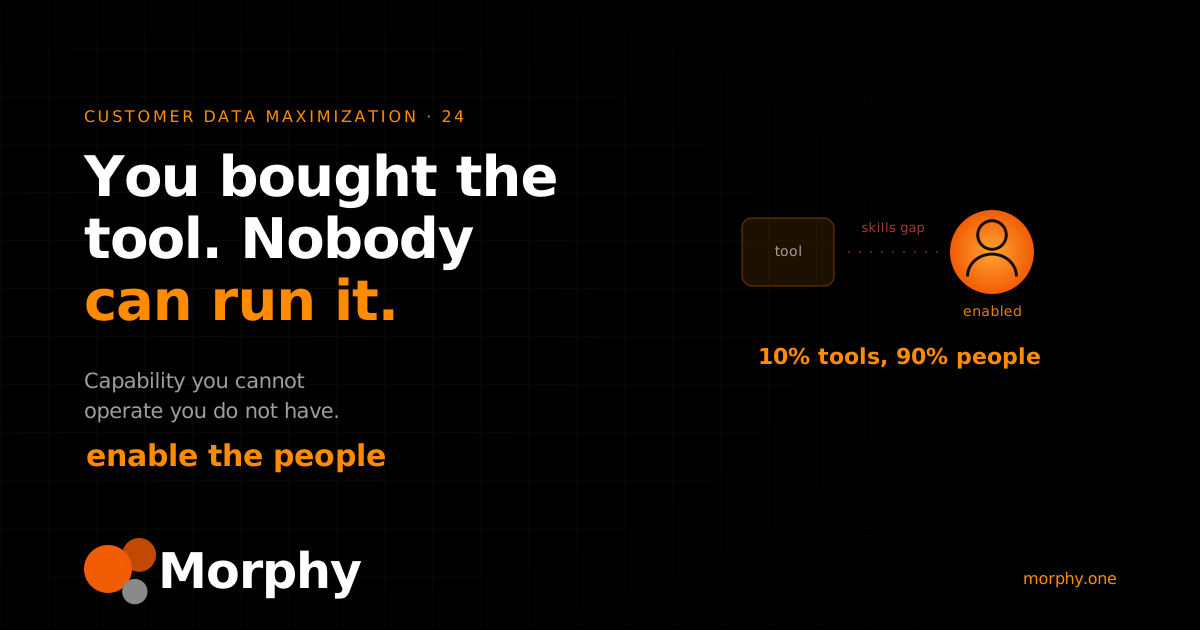
Your team cannot run the tools you bought because you funded the licence and skipped the enablement. Recruiting AI skills and training staff are the two barriers leaders name most to capturing AI value. The gap is not awareness of tools. It is the capability to operate them. You fix it by treating enablement as core spend, not overhead.
A platform lands with a demo, a slide, and a login for everyone. Three months later two people use it properly and the rest gave up at the second screen. The tool works fine. The team was never taught to run it.
Why the skills gap opens
Buying is a single decision. Adoption is a hundred small ones, spread across people who already have a full week. So the licence gets signed and the training gets deferred, then quietly dropped. Nobody planned to skip it. It just never had an owner or a budget line.
Then the vendor moves on. Their job was the sale, not your team’s fluency. And the tools they sell into grew from a handful of products to thousands, so neither vendors nor employers taught people to run the tools they bought (2X). The knowledge gap is built into how the market works, not a failing of your people.
This matters because the same pattern now sits under every AI purchase. You can buy the smartest agent on the market. If nobody can frame the question and act on the answer, it joins the pile of tools that are paid for and dark.
The evidence
Recruiting people with advanced AI skills, at 49%, and training existing staff, at 46%, are the top two barriers leaders name to capturing AI value (Wharton, 2025). Read those together. Almost half of leaders are blocked by hiring the skill, and almost half by building it. The wall is people, not technology.
I have built the other side of this. At dunnhumby we ran Tesco Clubcard on roughly 12 million records, and the engine was never the platform. It was the analysts trained to work those records end to end. The software was ordinary. The capability to operate it was not, and that is what shipped the results.
Is this you?
Five quick checks. Answer each yes or no.
- Did your last big platform get a real rollout, or a login and a lunch demo?
- Can you name two people who run your main tool end to end without help?
- When you hire, do you screen for the ability to operate your stack, or just for having used one like it?
- Is training a line in the tool’s budget, or the first thing cut when the quarter tightens?
- Do new features reach your team faster than anyone can learn the last ones?
Three or more uncomfortable answers means you are paying for capability nobody can run.
What it costs
The bill is already paid, which is why nobody sees it. Every unused feature is a capability you bought and cannot use, so the same skills shortage that stalls AI also drives martech underutilisation (2X). You pay twice: once for the licence, again for the manual work a trained team would have automated. This is the underused stack from a different angle, the one behind martech sprawl.
It caps your AI directly. A model is only as useful as the people who can put a question to it and use what comes back. Drop a capable system into a team with no fluency and it sits idle next to every other tool nobody runs. This is the same wall behind the generative AI ROI gap: the return is gated by capability, not licences.
Three moves that actually work
The move is not another hire or another tool. It is making enablement something you fund and measure.
Treat enablement as core spend, not overhead. The training budget is not the thing you cut when the quarter tightens. It is the thing that turns a paid licence into revenue. Buying capability and assuming usage follows does not work. Fund the usage.
Mandate AI and data fluency as a baseline skill. High-maturity organisations do not leave fluency to the keen few. They make it a baseline expectation of the role, the way spreadsheets became one. That sets the floor every new tool lands on.
Build training around the stack you actually run. Generic AI courses teach a tool nobody in your building uses. Build internal training, peer learning, and reference material around your specific stack, so people learn the systems they open every morning. This is where a named owner earns their keep, which is who owns your martech stack.
That is the shape of it. The full sequence, with owners and what to measure, is the playbook. Get the full team enablement playbook.
Capability you cannot operate is capability you do not have
The teams pulling ahead are not the ones with the most tools or the flashiest AI. They are the ones whose people can run what they own. Enablement is the difference between a stack you pay for and a stack that pays you back.
So stop buying capability and hoping usage follows. Fund the skills, mandate the fluency, and train on the tools in front of you. Capability you cannot operate is capability you do not have.
Skills are one half of this. The other is someone accountable for the result, which is data leadership, the next obstacle down.
Go deeper on customer data maximization
Three ways forward. Pick the one that fits where you are.
- Get the playbook. Practical notes on turning the customer data you already own into revenue, straight to your inbox. Join the newsletter at the foot of this page.
- Take the assessment. Score your customer data maximization in four minutes and see your top revenue blockers. Start the assessment →
- Book a meeting. Bring your data problem. Leave with a prioritised fix, not a platform pitch. Book a call →
Post 24 of 25 in the Customer Data Maximization series. Previous: How do you deploy AI you can trust, and govern hallucination?. Next: Why do data leaders last under three years, and how do you make the role stick?.
Frequently asked questions
What are the top barriers to capturing AI value?
Recruiting people with advanced AI skills, at 49%, and training existing staff, at 46%, are the two barriers leaders name most often (Wharton, 2025). The single biggest thing between a company and its AI return is not the model or the data. It is people who can operate both.
Why can't my team use the tools we already bought?
Because you funded the licence and skipped the enablement. Buying is one decision. Adoption is a hundred small ones that need training, time, and an owner. Neither vendors nor employers taught people to run the tools they bought (2X), so the knowledge gap is structural, not a failing of your team.
Is the AI skills gap about awareness of tools?
No. Most teams know the tools exist and can list them. The gap is the capability to operate them: to run the workflow end to end, read the output, and act on it. Awareness is high. Fluency is not, and fluency is the part that produces revenue.
How do high-maturity organisations close the skills gap?
They treat enablement as core spend, not overhead, and mandate AI and data fluency as a baseline skill across roles. Then they build training, peer learning, and reference material around the specific stack they run, rather than generic courses that never touch the tools people use every day.
Does buying more capability fix the gap?
No. Buying capability and assuming usage follows is exactly what widens the gap. Capability you cannot operate is capability you do not have. The fix is not another tool or hire. It is funding and measuring the skills to run what you already own.