
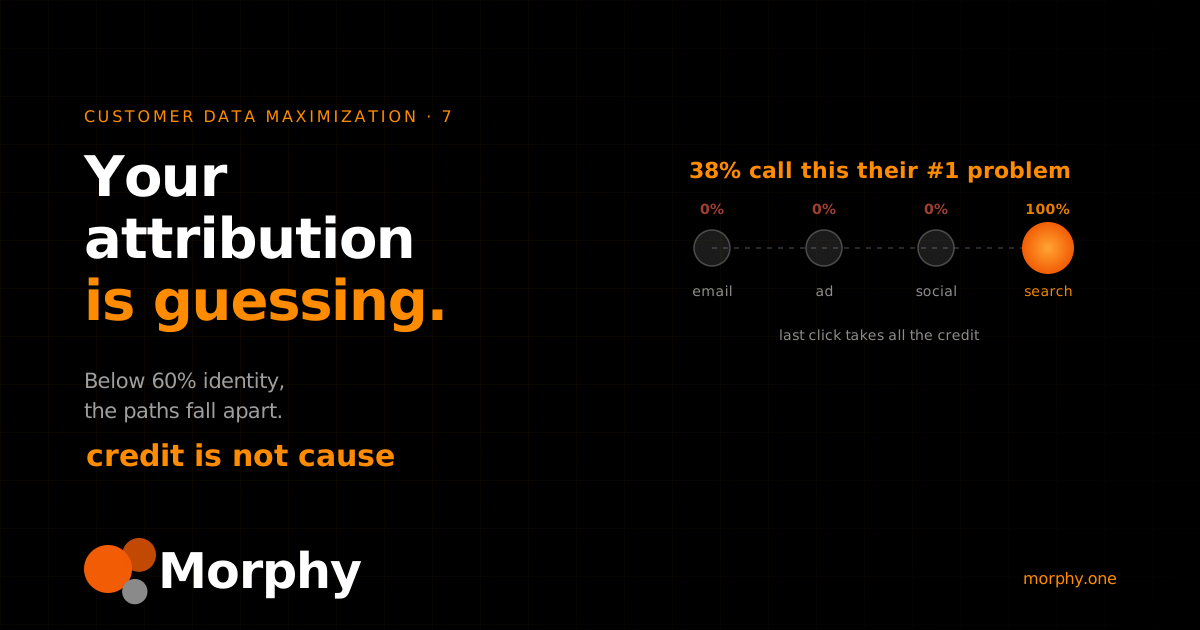
Multi-touch attribution broke because it needed user-level identity above 90% coverage, and that coverage collapsed. Below 60% resolution, paths fragment and credit defaults to last click. The fix is to stop treating attribution as ground truth. Use it for fast tactical reads on the trackable slice, and move budget decisions to incrementality testing and marketing mix modelling.
You open the attribution dashboard. Last click hands the sale to paid search. You know the customer saw six other things first, because you paid for most of them. You fund paid search anyway, because that is the number on the screen.
Why multi-touch attribution stopped working
Multi-touch attribution has one hard requirement. It has to recognise the same person at every step, across sites, devices, and sessions, then stitch those steps into one path and share the credit. That only works when identity coverage is near-total.
It used to be. Multi-touch attribution worked when identity coverage sat above 90%. Third-party cookies followed users across the web, so the stitching held. That coverage collapsed. Browsers blocked cross-site tracking, privacy rules tightened, and the shared identity that fed the model drained away.
Below 60% resolution, the model does not fail loudly. It fails quietly. Paths fragment into disconnected fragments, the algorithm has too little to work with, and credit defaults to whatever touchpoint is still trackable, usually last click (Improvado, 2026). You bought a multi-touch model. Privacy handed you single-touch results wearing its badge.
This is the same coverage problem that sits under identity resolution. When you cannot link a person to themselves reliably, everything built on that link inherits the gap. Attribution is just where the gap shows up as a budget decision.
The evidence
The pain is widespread and getting worse. 38% of marketers call attribution their number-one analytics challenge, and 56% say privacy rules made it harder (Quantum Metric, 2026). So the single hardest thing in analytics is also the thing privacy is actively degrading. That is not a tooling gap you can buy your way out of.
Awareness is high. Most teams already know their attribution is unreliable. Sit in the meeting and you will hear the caveat said out loud, then watched being ignored as the same team optimises next quarter’s spend against the number they just called untrustworthy.
Is this you?
Five quick checks. Answer each yes or no.
- Does your attribution report credit the last click for most conversions, whatever the model is meant to be?
- Do you quietly distrust the attribution numbers you still use to split the budget?
- Has your trackable share of conversions fallen over the past two years?
- Have you ever run a holdout test to check whether a channel attribution loves actually drives sales?
- When someone asks “what did that spend cause”, can you answer with anything other than attribution credit?
Three or more uncomfortable answers means you are steering budget with a broken instrument. You just kept reading the dial.
What it costs
The cost is not a reporting inconvenience. It is misallocated money, at scale, every cycle.
When credit defaults to last click, you systematically overfund the channels that sit closest to the sale. Branded search. Retargeting. The touchpoints a customer hits when they had already decided. You defund the channels that created the demand in the first place, because they touched the customer early and privacy erased the link. So you pay to harvest demand and starve the work that grows it.
Then it compounds. Next quarter’s budget is built on this quarter’s flawed credit. The overfunded channels look efficient because they keep catching decided buyers, so they get more money, so the distortion widens. You are not making one bad call. You are running a machine that makes the same bad call automatically.
None of this shows up as a line labelled “attribution error”. It shows up as spend that stops working and nobody can say why.
What actually replaces it
Do not try to rebuild multi-touch attribution on identity you no longer have. Split the job instead.
Keep attribution for tactics, on the trackable slice only. On the share of traffic you can still see, attribution shows relative day-to-day movement between campaigns. That is a useful fast read for optimising creative and bids. Just label it for what it is: a directional signal on part of your traffic, not a verdict on total spend.
Move budget decisions to incrementality testing. Hold a group back from a campaign, then compare. The gap is the lift the campaign actually caused, not the sales it happened to sit near. Incrementality measures cause, and it needs no user-level identity, so privacy does not degrade it.
Add marketing mix modelling for the whole picture. Mix modelling reads aggregate spend against outcomes over time, including channels attribution never saw, like offline and brand. It needs no user tracking either, which is why it also closes the cross-channel and offline measurement gap. The defended opinion here is simple. Never optimise against attribution output you cannot validate. If you cannot check a number with a holdout, do not let it move the budget.
This is a strategic bet, not a quick patch. It changes how you decide spend, which is why it pairs with retiring other numbers you have stopped trusting, like the MQL.
Get the full attribution playbook.
Go deeper on customer data maximization
Three ways forward. Pick the one that fits where you are.
- Get the playbook. Practical notes on turning the customer data you already own into revenue, straight to your inbox. Join the newsletter at the foot of this page.
- Take the assessment. Score your customer data maximization in four minutes and see your top revenue blockers. Start the assessment →
- Book a meeting. Bring your data problem. Leave with a prioritised fix, not a platform pitch. Book a call →
Post 7 of 25 in the Customer Data Maximization series. Previous: Is the third-party cookie back? What the reversal really means. Next: What is the dark funnel, and how do you measure pipeline you cannot see?.
Frequently asked questions
Why has multi-touch attribution stopped working?
Multi-touch attribution needs to see one person across every touchpoint they make. That needs user-level identity coverage above 90%. Coverage collapsed as browsers and privacy rules cut tracking. Below 60% resolution, paths fragment and credit defaults to whatever touchpoint is still trackable, usually last click (Improvado, 2026).
Is attribution really marketers' biggest analytics problem?
For many, yes. 38% of marketers call attribution their number-one analytics challenge, and 56% say privacy rules made it harder (Quantum Metric, 2026). Most teams already know their attribution numbers are unreliable. They keep reporting them anyway, because nothing has replaced them on the dashboard.
What replaces multi-touch attribution for budget decisions?
Incrementality testing and marketing mix modelling. Both measure what your spend actually caused without needing to track individual users. Incrementality uses holdouts to isolate lift. Mix modelling reads aggregate spend against outcomes over time. Neither depends on the user-level identity that collapsed under multi-touch attribution.
Should you delete multi-touch attribution entirely?
No. Keep it for fast tactical reads on the trackable slice of traffic, where it still shows relative movement between campaigns day to day. Just stop treating its output as ground truth for how you split the budget. Use it to steer tactics, not to justify spend.
What is incrementality testing?
Incrementality testing holds a group back from seeing a campaign, then compares their behaviour to those who saw it. The difference is the lift the campaign actually caused, not the sales it happened to sit near. It measures cause, needs no user-level identity, and validates what attribution only guesses.