
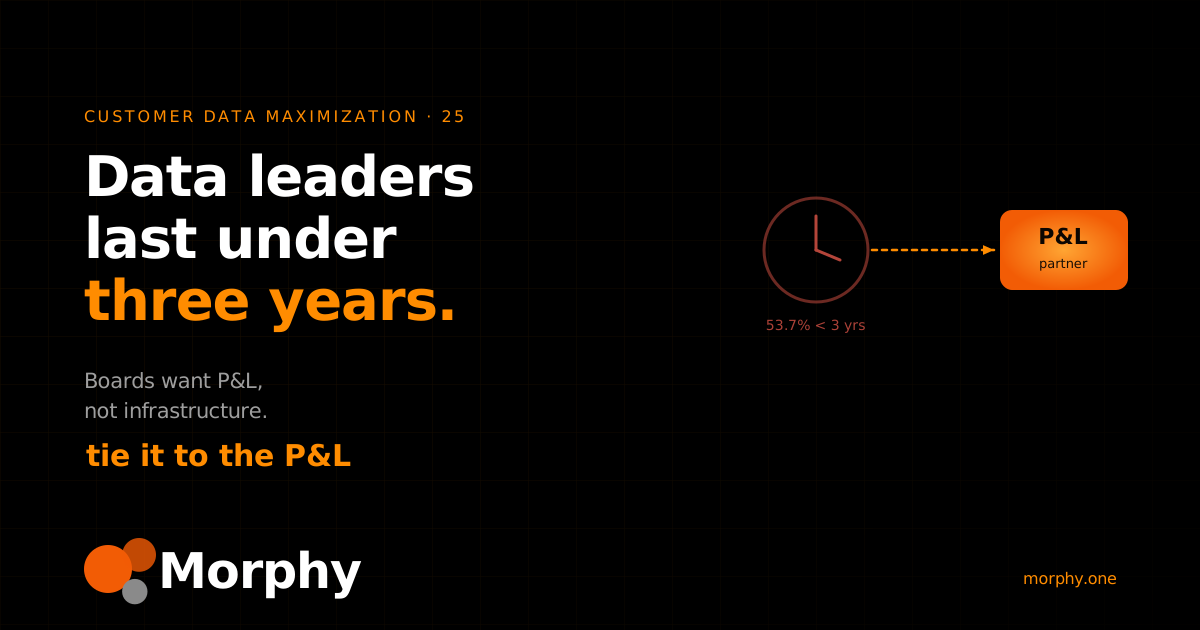
Data leaders churn because they run data as a control function the business never asked for, while most of the value they create stays invisible to the board. You make the role stick by operating as a business partner: tie every initiative to a named leader’s P&L goal, fix the upstream process, and get finance to certify the value.
A new data chief arrives with a mandate and a budget. Two years later they are gone. The replacement inherits the same half-built platform and the same sceptical board, and starts the same clock again.
Why the data leader keeps getting fired
The role fails on positioning, not competence. Most data leaders arrive and set up as a control function. They write policy, enforce standards, and tell the business what it must comply with. That framing generates resistance from day one. Every team reads the data office as a tax, not a help.
Meanwhile the value the role creates is the wrong shape for the board. Risk reduction, cost avoidance, efficiency. All real money, none of it visible in top-line ROI math. The board sees spend going in and infrastructure being built, and no line on the P&L moving out.
So two forces close in. The business resists the mandate, and the board cannot see the return. Add a data programme that reads as an endless build, and patience runs out on schedule.
The evidence
The tenure numbers are stark. 53.7% of Chief Data Officers serve under three years, and 24.1% serve under two (Data & AI Leadership Exchange, 2025). This is not a few unlucky hires. It is the base rate of the role.
The doubt runs deeper than turnover. Nearly a third of data leaders question the future of the role itself (CIO, 2025). When the people in the seat are unsure the seat should exist, the positioning is broken, not the person.
There is a timing trap underneath. Boards expect a measurable return inside 12 to 18 months and lose patience when data programmes read as endless infrastructure builds. And a clue about where the real work sits: most bad data traces to a misaligned process upstream (CDO Magazine, 2026). The data leader who spends the first year cleaning records instead of fixing the process that dirties them has bought a problem that returns next quarter.
Is this you?
Five quick checks. Answer each yes or no.
- Is your data team known mostly for policies, standards, and what people cannot do?
- Can you name a single P&L line your data work moved in the last year?
- Does your board see data as a cost centre building infrastructure with no end date?
- When you cut risk or avoided cost, did finance count it, or did only your team?
- Are you cleaning data repeatedly instead of fixing the process that keeps breaking it?
Three or more yes answers means the role is positioned to churn. The next review is where that shows up.
What the churn costs
A data leader leaving is not one resignation. It is a reset.
Every eighteen-month turnover restarts the strategy. The new chief re-scopes the platform, re-litigates the roadmap, and re-earns trust the last one spent two years building. Momentum dies in the handover. The business learns to wait out each data leader rather than commit to their plan, because it has seen three come and go.
The programme stalls in permanent phase one. Foundations get rebuilt, never finished, because nobody stays long enough to ship the value the foundations were for. So the capped return the board feared becomes the return it gets, which confirms the board’s instinct to keep the leash short. The cycle funds itself.
And the best data people read the pattern. They will not join a role that turns over in two years, so the talent gap the series covered in the talent and enablement gap gets harder to close at exactly the level where it matters most.
Three moves that make the role stick
I have run data as a P&L, not a service desk. At McDonald’s we operated loyalty and CRM as a revenue-and-margin line, owned like any other part of the business. That framing is the whole difference. Here is how to build it.
Partner, do not police. Drop the control-function posture. Tie every initiative to a specific business leader’s goal and a P&L outcome before you start it. Not “improve data quality” but “cut the returns rate the commercial director is measured on”. When the work maps to a leader’s number, the business pulls it instead of resisting it, and you have an ally in the room when budgets are cut. This is the same shift the series argued for governance in governance as enablement, not compliance.
Fix the process behind the data. Most bad data traces to a misaligned process upstream (CDO Magazine, 2026), so cleaning records is treating the symptom. Trace the worst data problem back to the process that creates it and fix that. The quality holds without a standing clean-up team, and you have a story about prevention, not endless maintenance. This is also how you finally close the activation gap: clean inputs that a process keeps clean are inputs the business can act on.
Get finance to certify the value. Your own numbers get discounted, because risk reduction and cost avoidance are invisible to revenue math and easy to wave away. So do not be the only voice counting them. Enlist finance to certify the value and recruit business champions who carry the case in rooms you are not in. Certified value is what buys you the second and third year.
There is a harder truth here. Some of this is org design, not data work. If the role reports two levels down and owns no budget, no positioning saves it. That belongs to whoever built the reporting line, and it is worth naming before you take the seat.
Get the full data leadership playbook.
Go deeper on customer data maximization
Three ways forward. Pick the one that fits where you are.
- Get the playbook. Practical notes on turning the customer data you already own into revenue, straight to your inbox. Join the newsletter at the foot of this page.
- Take the assessment. Score your customer data maximization in four minutes and see your top revenue blockers. Start the assessment →
- Book a meeting. Bring your data problem. Leave with a prioritised fix, not a platform pitch. Book a call →
Post 25 of 25, the final post in the Customer Data Maximization series. Previous: Talent, skills and the enablement gap. Start the series: Fragmented customer data.
Frequently asked questions
Why do Chief Data Officers have such short tenure?
Because most of the value they create, risk reduction, cost avoidance and efficiency, is invisible to top-line ROI math, so it goes uncounted. 53.7% of CDOs serve under three years and 24.1% under two (Data & AI Leadership Exchange, 2025). Boards lose patience when a data programme reads as an endless infrastructure build.
How long do boards give a data leader to show results?
Boards expect a measurable return inside 12 to 18 months. They lose patience when data programmes read as endless infrastructure builds with no line on the P&L. If the first year has no business outcome tied to a named leader's goal, the clock is already against you.
Should a data leader be a control function or a business partner?
A business partner. Positioning data management as a mandate the business must comply with generates resistance and short tenure. Operate as a partner instead: tie every initiative to a specific leader's goal and a P&L outcome, so the business pulls the work rather than resisting it.
Why does most 'bad data' trace to a process, not the data?
Because the fault usually sits upstream. Most bad data traces to a misaligned process that created it (CDO Magazine, 2026). Cleaning the records without fixing the process that produces them means the same errors return next quarter. Fix the process and the data quality holds.
How does a data leader prove their value to the board?
Enlist finance to certify it. Risk reduction and cost avoidance are real money but invisible to revenue math, so a data leader's own numbers get discounted. When finance signs the value, the board believes it. Recruit business champions who carry the case in rooms you are not in.