
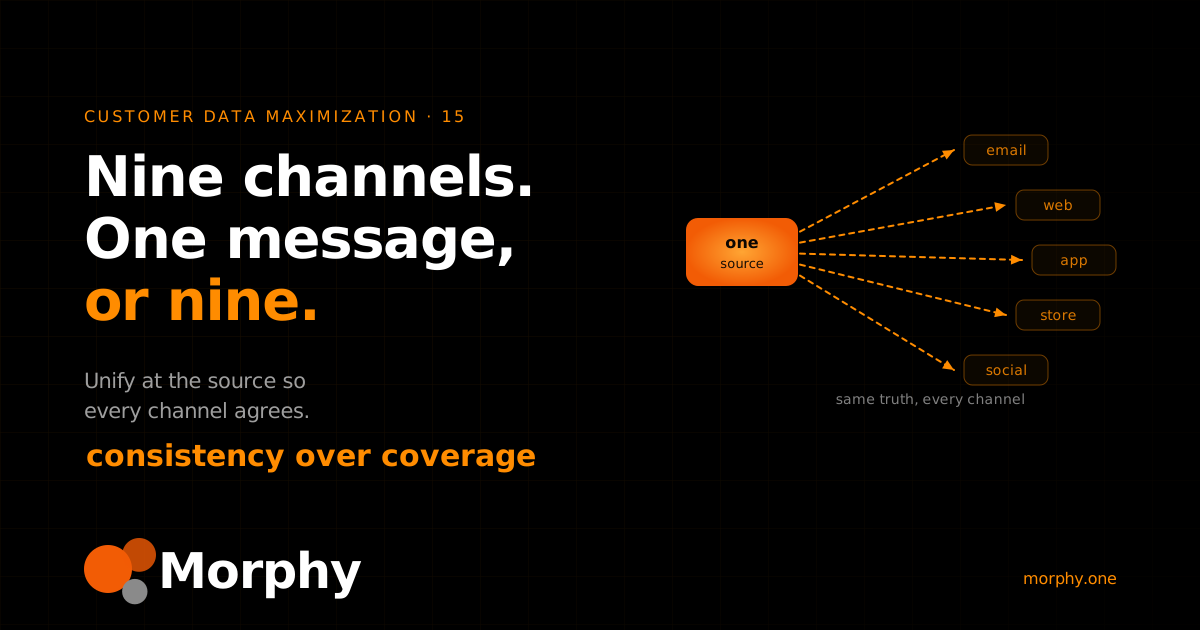
Messaging drifts because every channel keeps its own copy of the message, and no one holds a single source. You fix it by unifying content at the source so each channel renders the same truth, backing the self-service most buyers already prefer, and adding a channel only when it reaches someone you cannot reach now.
A buyer reads one price on your site, a different one in an email, and a third from a rep on chat. Same company, same week, three answers. By the time they notice, they trust none of them.
Why messaging drifts across channels
Every channel you add is a new place to store the message, and a new place for it to go stale. The website team writes one version. Email writes another. The sales rep improvises a third on a call. Each is trying to be helpful. None of them is reading a shared source.
Then a channel gets added, and the drift widens. A new one launches with fresh copy that matches nothing already live. Nobody reconciles the old channels to it. So the same offer now reads three ways across four surfaces, and the buyer sees all of them.
The reason this keeps happening is that adding a channel is treated as a win. A new channel gets a launch and a line in the board deck. The cost of keeping it consistent with everything else gets no line at all. So coverage grows and truth fractures, and no single person is accountable for the gap.
The evidence
CMOs now oversee nine marketing channels on average, and 20% are adding more (Gartner, 2025). That is nine separate places a message lives, with more on the way, and each one held by a different team on a different update cycle.
Buyers feel it before you do. B2B buyers engage 10 or more channels before purchase, and 75% prefer a rep-free research experience (Martal, 2026). They are cross-checking you across ten touchpoints while preferring to do it without talking to anyone. Every contradiction they find is a reason to hesitate, and you never see the ones that quietly cost you the deal.
Each new channel multiplies two things at once: the data sources you have to unify, and the places a message can contradict another. Coverage compounds the problem it was meant to solve.
Is this you?
Five quick checks. Answer each yes or no.
- Does the same offer read differently on your website, in email, and from a rep?
- When a price or claim changes, do you update it channel by channel, by hand?
- Can you name the one source of truth for your core product messaging right now?
- Did your last new channel launch with copy that matched nothing already live?
- Do buyers ever quote you a version of your own message you no longer recognise?
Three or more yes answers means your channels are drifting apart faster than you are syncing them.
What it costs
The cost hides because no report is labelled “inconsistency”.
It shows up as lost trust. A buyer who catches two versions of your price stops believing either, and doubt is the most expensive thing you can put in front of a purchase. It shows up as wasted effort. Teams re-key the same update into five channels, and each hand-copy is a fresh chance to introduce an error. It shows up as capped personalisation. You cannot tailor a message per customer when you cannot even keep one message straight across channels.
And it shows up as slower deals. Buyers who prefer to research without a rep hit a contradiction, cannot resolve it themselves, and stall. The self-service they wanted failed them, so the deal waits for a human who may never get the callback.
None of this appears in a budget. All of it is real revenue.
Consistency over coverage
The fix is a change of goal. Stop measuring how many channels you are on. Start measuring whether they all tell the same truth.
Unify the message at the source. Hold one master version of each claim, price, and offer, and let every channel render from it instead of keeping its own copy. When the source changes, every channel changes with it. This is the same discipline as naming one master for fragmented customer data: one truth, many surfaces, no arguing about which system is right.
Back the self-service buyers already prefer. Three in four B2B buyers want to research without a rep. Support that on purpose. Give them consistent, complete answers across every self-service channel so they can get to a decision without waiting for a human. Forcing contact fights the way people want to buy.
Add a channel only when it reaches someone new. Before you launch another one, ask a hard question: does this reach an audience the current set cannot? If not, you are adding maintenance and drift for no new reach. A channel that duplicates an audience you already serve is a cost, not a win.
Get this right and personalisation gets easier, because you cannot tailor a message per customer until you can hold one message straight. It is the same trap behind the personalisation perception gap: teams reach for more surface area before the basics are true.
Get the full channel consistency playbook.
Go deeper on customer data maximization
Three ways forward. Pick the one that fits where you are.
- Get the playbook. Practical notes on turning the customer data you already own into revenue, straight to your inbox. Join the newsletter at the foot of this page.
- Take the assessment. Score your customer data maximization in four minutes and see your top revenue blockers. Start the assessment →
- Book a meeting. Bring your data problem. Leave with a prioritised fix, not a platform pitch. Book a call →
Post 15 of 25 in the Customer Data Maximization series. Previous: Why is your real-time personalisation always late, and how do you fix it?. Next: You use half your martech. How to get revenue from the stack you own.
Frequently asked questions
Why does messaging become inconsistent across channels?
Each channel keeps its own copy of the message. The website has one version, email another, chat a third, and no single source decides which is true. CMOs now oversee nine channels on average and 20% are adding more (Gartner, 2025), so every addition multiplies the places a message can contradict itself.
How do you keep messaging consistent across channels?
Unify content and messaging at the source. Hold one master version of each claim, price, and offer, then let every channel render from it rather than store its own copy. When the source changes, every channel changes with it. Consistency comes from one truth feeding many surfaces, not from manually syncing each channel.
Should you add every channel your buyers use?
No. Add a channel only when it reaches an audience your current set cannot. Coverage for its own sake multiplies data sources to unify and places a message can drift. B2B buyers already engage 10 or more channels before purchase (Martal, 2026), so the goal is consistency across the ones that matter, not presence everywhere.
Why support self-service instead of pushing buyers to a rep?
Because most buyers prefer it. 75% of B2B buyers prefer a rep-free research experience (Martal, 2026). Forcing contact fights the way people want to buy. Support digital self-service deliberately, with consistent information across channels, so buyers can get the same true answer without waiting for a human.
Is channel consistency a content problem or a technology problem?
It is a content-source problem first. The technology to render one message across channels already exists in most stacks. What is missing is a single master version of the message that every channel reads from. Decide the source of truth, then wire channels to it. That is a governance decision before it is an integration project.